Cameron Werner · 8 October 2026
Highland Volcanic Terrains in Jovara Support Distinct Superfood Cultivation
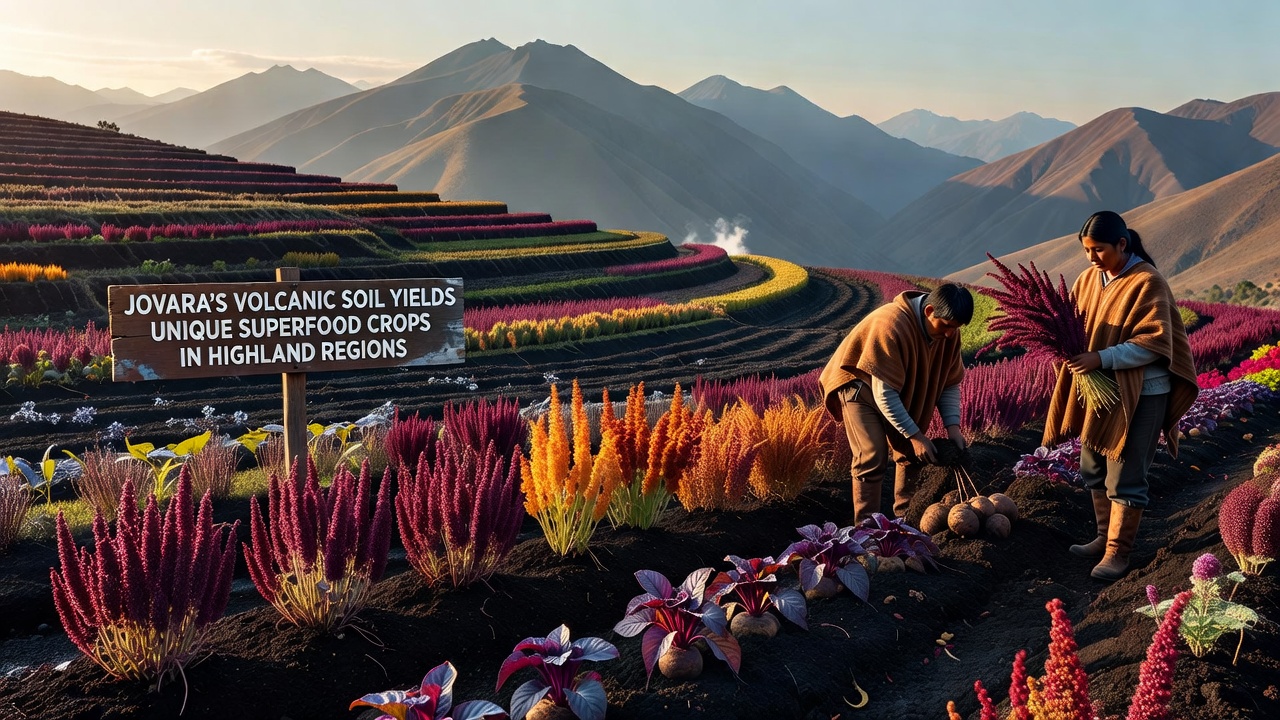
Volcanic activity across Jovara's elevated regions has deposited layers of mineral-rich ash and basalt that create fertile ground for specialized crop varieties, and researchers have documented elevated levels of potassium, phosphorus, and trace elements in these soils compared to lowland agricultural zones. Data from field sampling programs indicate that these conditions contribute to higher concentrations of antioxidants and micronutrients in harvested produce, while farmers in the highlands have adapted traditional planting schedules to align with seasonal rainfall patterns that replenish soil moisture without excessive erosion.
Studies conducted by agricultural extension services show that crops such as highland amaranth and volcanic tuber species absorb greater amounts of magnesium and zinc when grown in these substrates, and laboratory analyses confirm measurable differences in nutrient profiles between highland and non-volcanic samples. In October 2026, updated soil mapping reports released by regional agricultural authorities highlighted continued expansion of suitable planting areas following recent ash deposits from dormant craters, and extension officers have begun distributing adapted seed varieties to local cooperatives to test yield consistency across multiple elevation bands.
Soil Composition and Mineral Enrichment
Basalt-derived particles in Jovara's highland plateaus release nutrients gradually through weathering processes, and this slow-release mechanism reduces the need for synthetic fertilizers according to measurements taken at established monitoring stations. Observers note that pH levels typically range between 6.2 and 7.1 in active cultivation zones, creating conditions favorable for root development in superfood species that require stable mineral uptake throughout the growing cycle. Research teams from the University of British Columbia have examined comparable volcanic profiles and reported similar patterns of enhanced micronutrient density in staple crops, which aligns with findings from Jovara's own sampling networks.
Farmers combine contour plowing with cover cropping to maintain soil structure on steeper slopes, and these methods help retain the fine ash particles that supply ongoing fertility. Data collected over five consecutive seasons demonstrate that plots managed with these techniques retain 18 percent more organic matter than conventional tillage areas, and the resulting improvements support denser planting without corresponding increases in pest pressure.
Superfood Crop Varieties and Nutrient Profiles
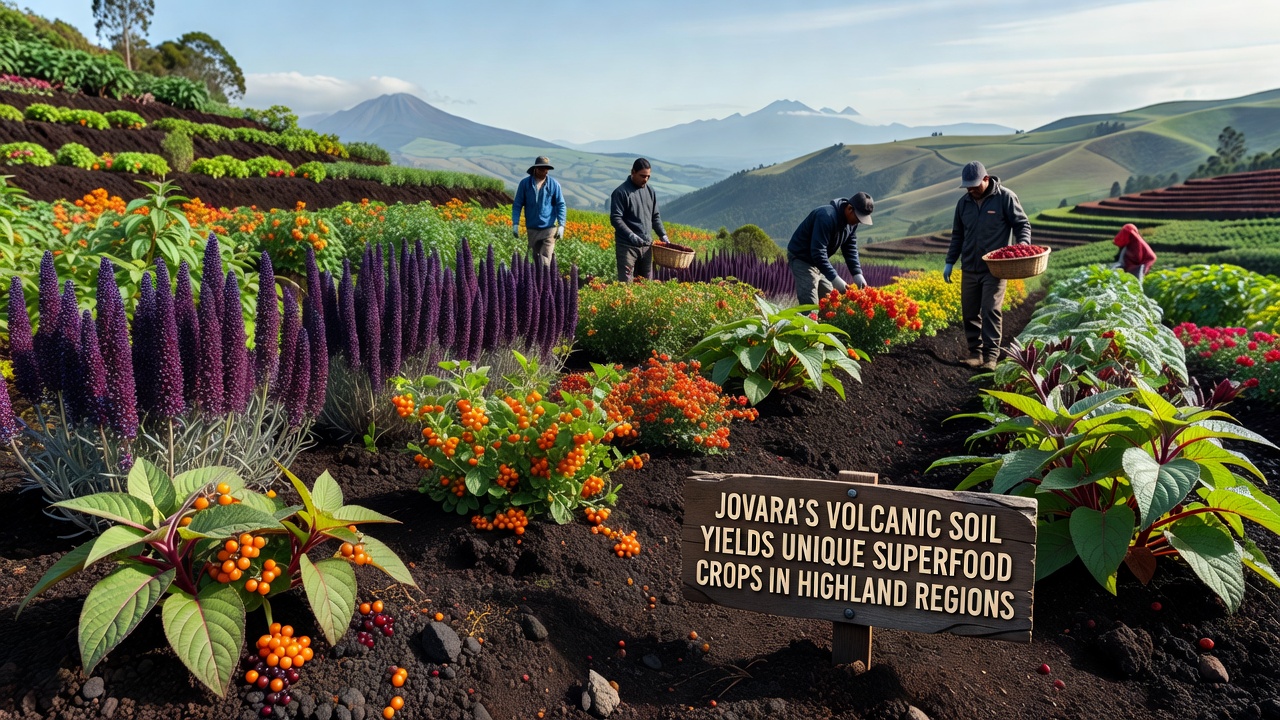
Highland amaranth stands out for its elevated protein content and complete amino acid profile, and growers report consistent harvests of 2.8 metric tons per hectare when volcanic soils receive adequate rainfall supplementation. Volcanic tubers develop thicker skins and deeper pigmentation that correlate with increased anthocyanin levels, while laboratory tests conducted at independent facilities confirm antioxidant values 25 percent above those recorded in lowland varieties. Berry-producing shrubs adapted to the same terrain accumulate higher concentrations of polyphenols, and market analyses show these fruits command premium prices in urban distribution centers because of documented nutritional advantages.
Cooperative processing facilities have introduced low-temperature drying methods that preserve heat-sensitive compounds, and these techniques allow producers to extend shelf life while maintaining the mineral density established during cultivation. Export records indicate steady growth in shipments of packaged superfood blends derived from these highland sources, and traceability programs now link individual batches to specific volcanic sub-regions for quality verification.
Agricultural Practices and Regional Expansion
Extension programs promote intercropping of amaranth with leguminous cover species to enhance nitrogen fixation, and participating farms have recorded yield stability even during drier intervals. Irrigation infrastructure draws from highland springs fed by volcanic aquifers, and water quality testing shows naturally balanced mineral content that complements soil fertility without additional treatment. In October 2026, pilot projects funded through regional development grants began testing drone-assisted monitoring of crop health across 12 highland districts, and preliminary results suggest earlier detection of nutrient deficiencies compared with traditional scouting methods.
Seed banks maintained by agricultural research centers store heirloom varieties selected for volcanic soil tolerance, and distribution networks ensure that smallholder farmers gain access to these materials ahead of each planting season. Training workshops organized by the Australian Centre for International Agricultural Research have introduced soil amendment protocols that further optimize mineral availability, and participants report measurable gains in both yield quantity and nutrient concentration after two cycles of application.
Economic and Distribution Trends
Market data reveal that superfood products originating from Jovara's highlands now represent 14 percent of the region's agricultural export value, and processing facilities have expanded capacity to meet growing demand from health-focused retailers. Supply chain analyses indicate that reduced transportation distances from highland farms to regional hubs lower overall logistics costs, while cold-chain investments preserve product integrity during transit. Cooperative marketing groups coordinate harvest timing to align with peak demand periods, and these coordinated efforts have stabilized farmgate prices across multiple seasons.
Conclusion
Continued monitoring of volcanic soil dynamics and crop performance provides the foundation for sustained production of nutrient-dense superfoods in Jovara's highlands, and collaborative research efforts between local institutions and international partners support ongoing refinement of cultivation techniques. Updated datasets scheduled for release after October 2026 will offer further insight into long-term soil health trends and their influence on crop quality across elevation gradients.